Background:
The organizer’s held their first edition of the race in 2022. This is a women’s only gravel race held in the remote location of Ovando, Montana. For 2023, two courses were offered: a 45ish mile course, and an 80ish mile course. You can check out their website to learn more about the race, the name, the location, and the fantastic crew putting it all together.
Registration & Race Communication:
The registration process was smooth and I was able to register myself and a friend without any trouble. Communication leading up to the event was timed well, and began at one month out with a weekly email update. Lodging, camping, parking, cutoff times, and the event schedule were very well communicated. Final GPX files were provided at approximately one week out from the event. The organizers did a fine job of addressing two concerns: snow pack (which did finally melt in time) and grizzly bears. Yes, grizzly bears.
When we arrived in Ovando, Montana on Friday night for packet pickup, the hardest part was finding the church where packet pickup was located. Ovando is a tiny town and prominent signage isn’t really necessary when everyone from there knows where everything is! But it didn’t take long to find and we were able to peruse the raffle items, meet the organizers, and get answers to any questions we had.
The Race:
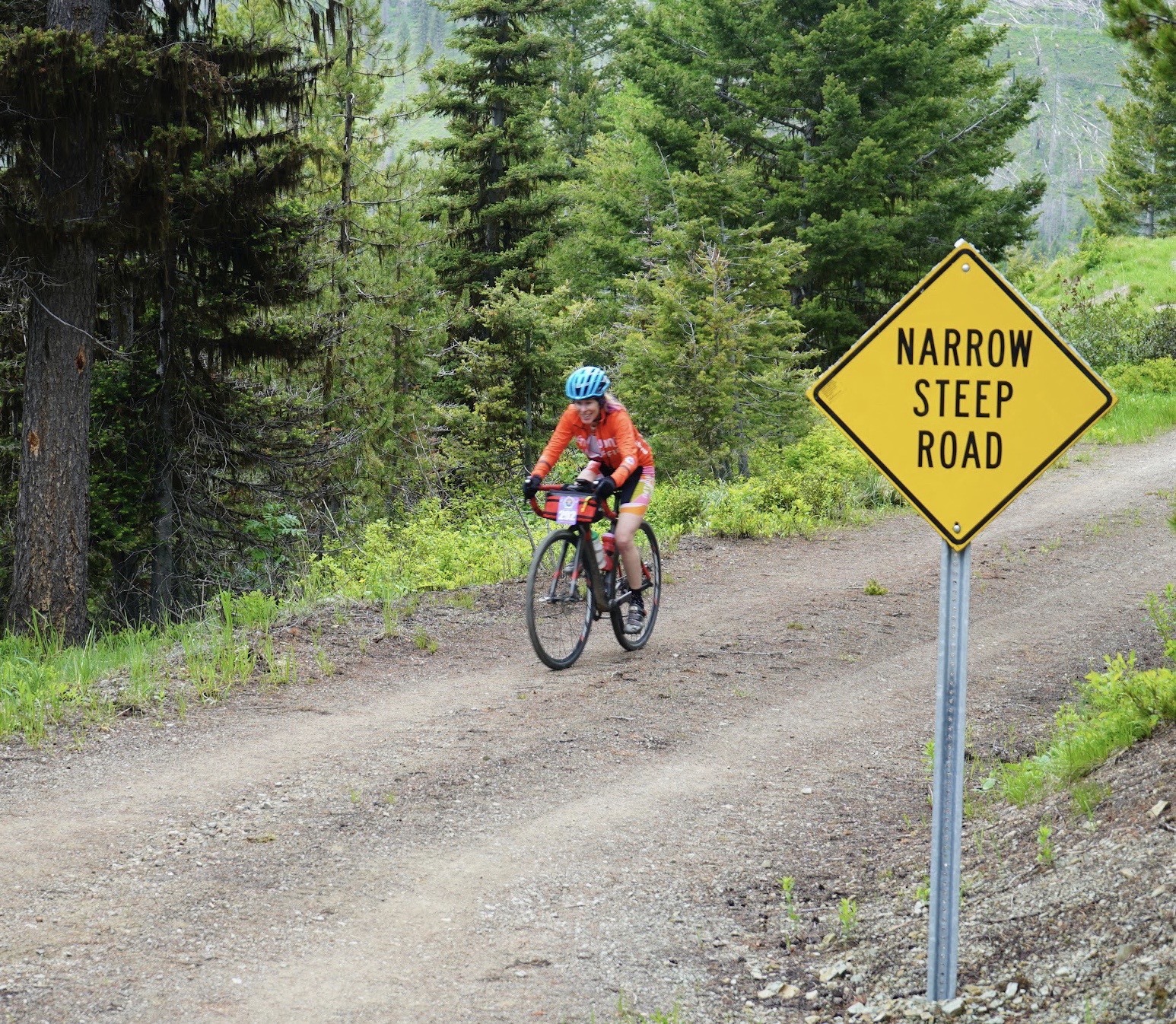
There were two start waves on Saturday morning. The longer route departed earlier at 8 AM, and the shorter course departed at 10 AM. Parking was very clearly communicated to racers; as were expectations about stopping before the one major highway crossing. The course was very well marked, with both signage, and volunteers pointing the right direction. There were two aid stations along the shorter course: one at the base of the climb, and the other just five miles away at the summit of the climb. Personally, I would have liked to see these spread out a bit more. The first aid station, was well stocked with pre-packaged snacks and fluids for topping off bottles. They also offered olives and pickles – yum! The second station had a similar offering, although slightly fewer options – I’m guessing this is because it was even more remotely located than the first aid station.
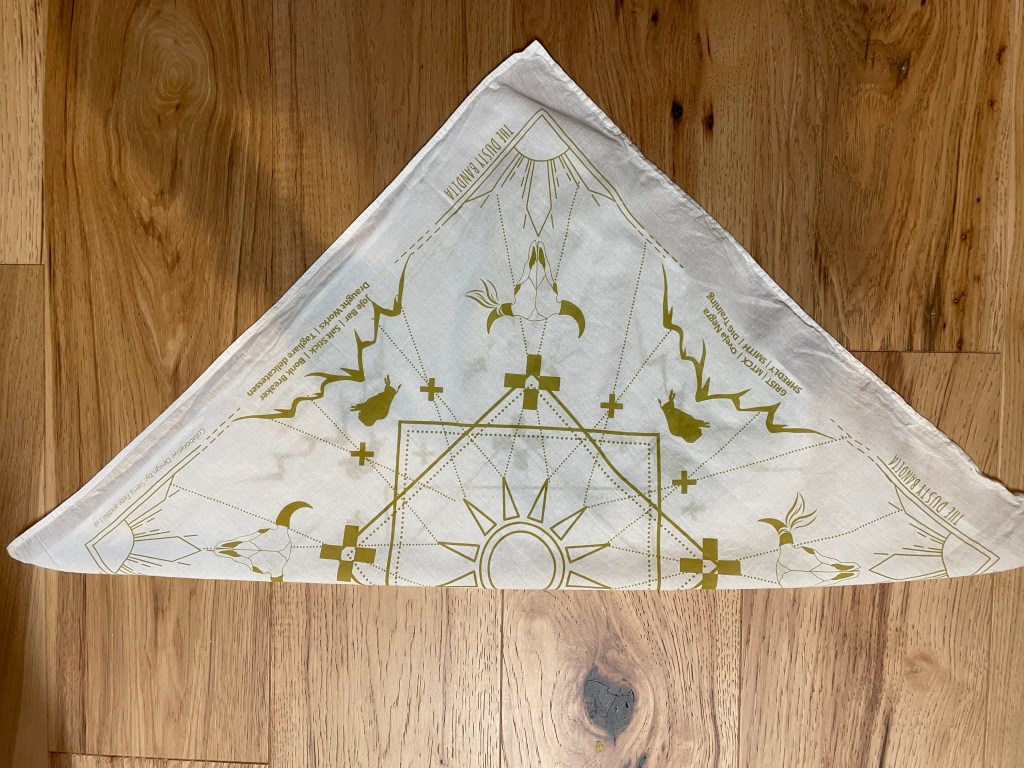
My favorite part of this race was the finish line, which was not visible until you were nearly there. The very last quarter mile of the race was up a slight hill and the finish line was hidden around a corner in the heart of the town square. When you finally crested the hill and came around the corner, there were hoards of people gathered in the town square to watch finishers. There was applause, inflatables surrounding the timing equipment, and an announcer who made me feel like I had just finished in first place. Inclusivity and support were some of the reasons this race was founded, and I definitely felt both throughout event, but especially at the finish line. All race finishers received a Dusty Bandita bandana and stainless steel coffee mug.
All race entries included a post-race lunch ticket, which was very important. A town the size of Ovando has few and limited dining options for such a large crowd. Racers had their choice of sandwich, chips, drink, and cookie.
What’s the story with the grizzly bears that I mentioned earlier, you may be wondering. In 2021, a woman was was pulled from her tent by a grizzly bear as she was sleeping. Race organizers did a fantastic job of communicating the seriousness of tent camping in the Ovando area. Here’s an excerpt from one of their emails:
If you do choose to camp, you’re on your own, and please, please, please practice BEAR SAFETY while camping. Grizzlies frequent the area and roam around the town of Ovando, so take bear safety seriously:
- Have bear spray on you and in your tent/van.
- No food or fragrances (including toothpaste) in tents/vans, etc.
- Use secure bear storage.
Their website even has an entire page dedicated to this topic.
Despite all the talk of grizzly bears, I didn’t see a single one on race day. The closest thing to a grizzly bear was the huge pile of scat on the ascent to the second aid station. They were most definitely in the area!
It would be remiss if I didn’t mention the significant number of women who opted to stop in the middle of roads or on blind corners to chat or address mechanical issues. This happened on flat roads where there was plenty of room to pull to the side, and on the descent from the race course summit, where there wasn’t much room or visibility for riders coming up from behind. They were oblivious to the danger they were putting themselves in, as well as every other cyclist who encountered them. This is something the race organizers should address in their communication in the future. It seems like it would be an obvious safety concern, but due to the large numbers of women that were doing it, it should be clearly communicated going forward.
While Ovando was certainly out of the way, I would do it again!


 Two Wheeled Inspiration