Beartooth La Femme – a Ride Review

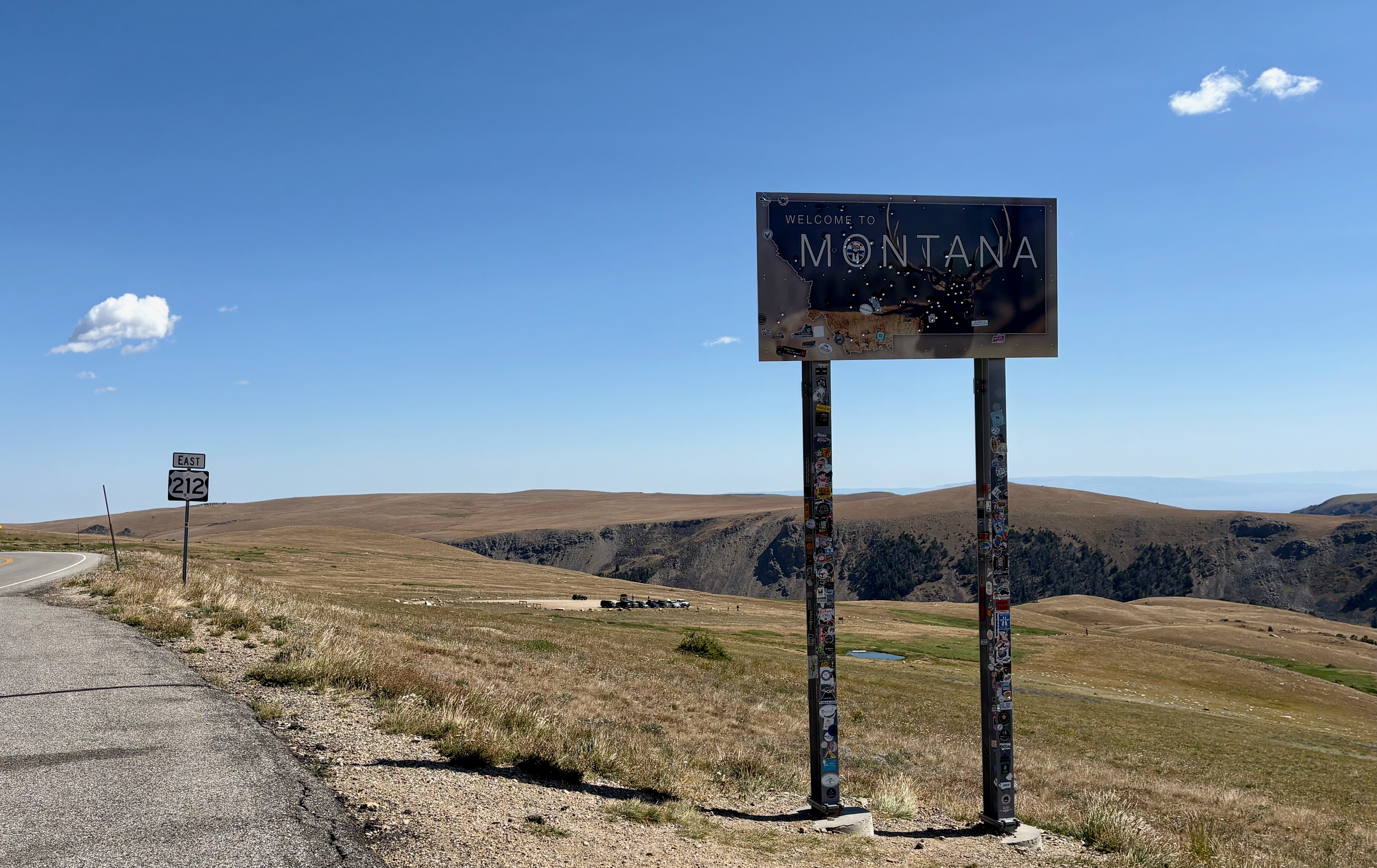
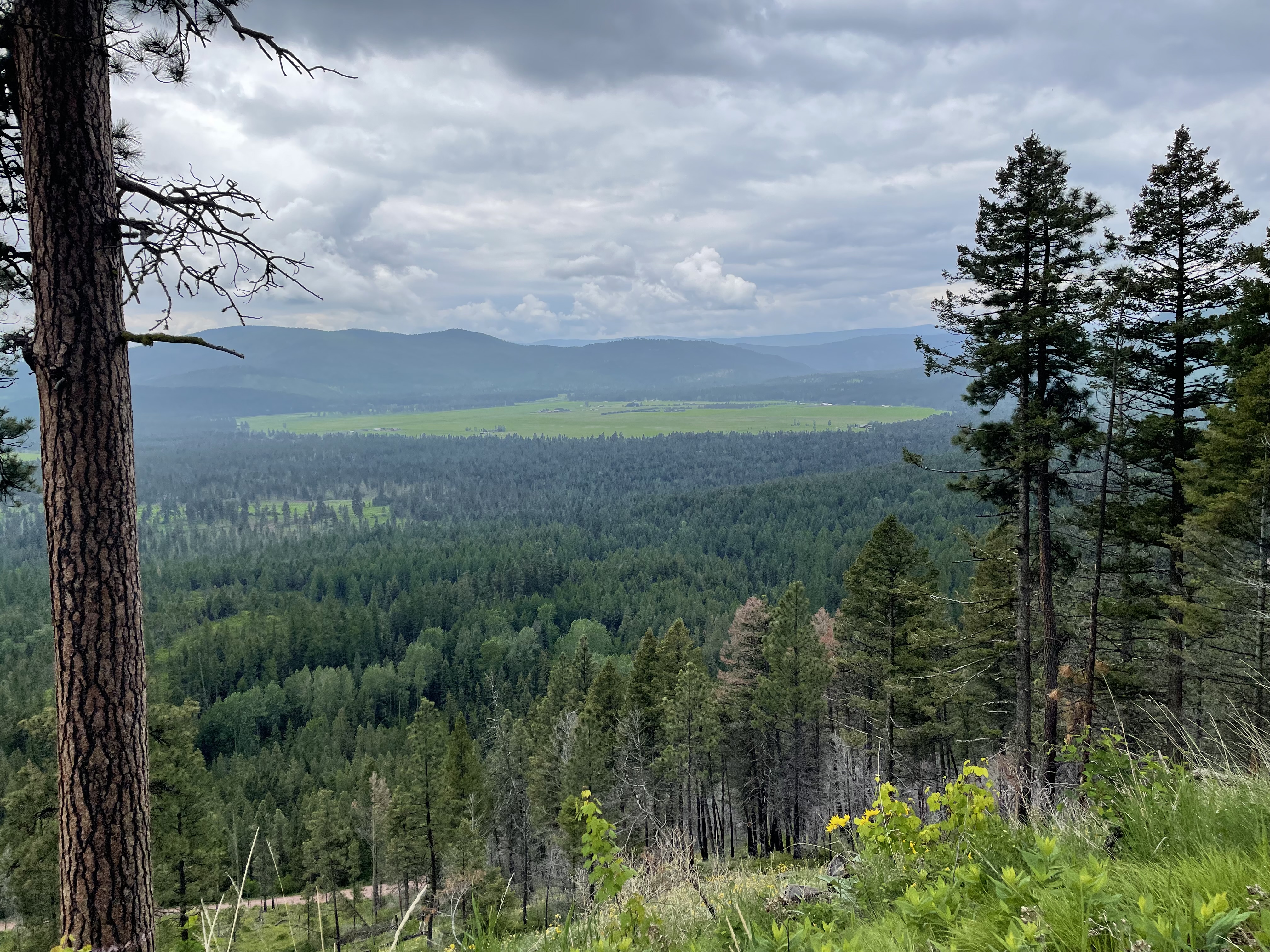
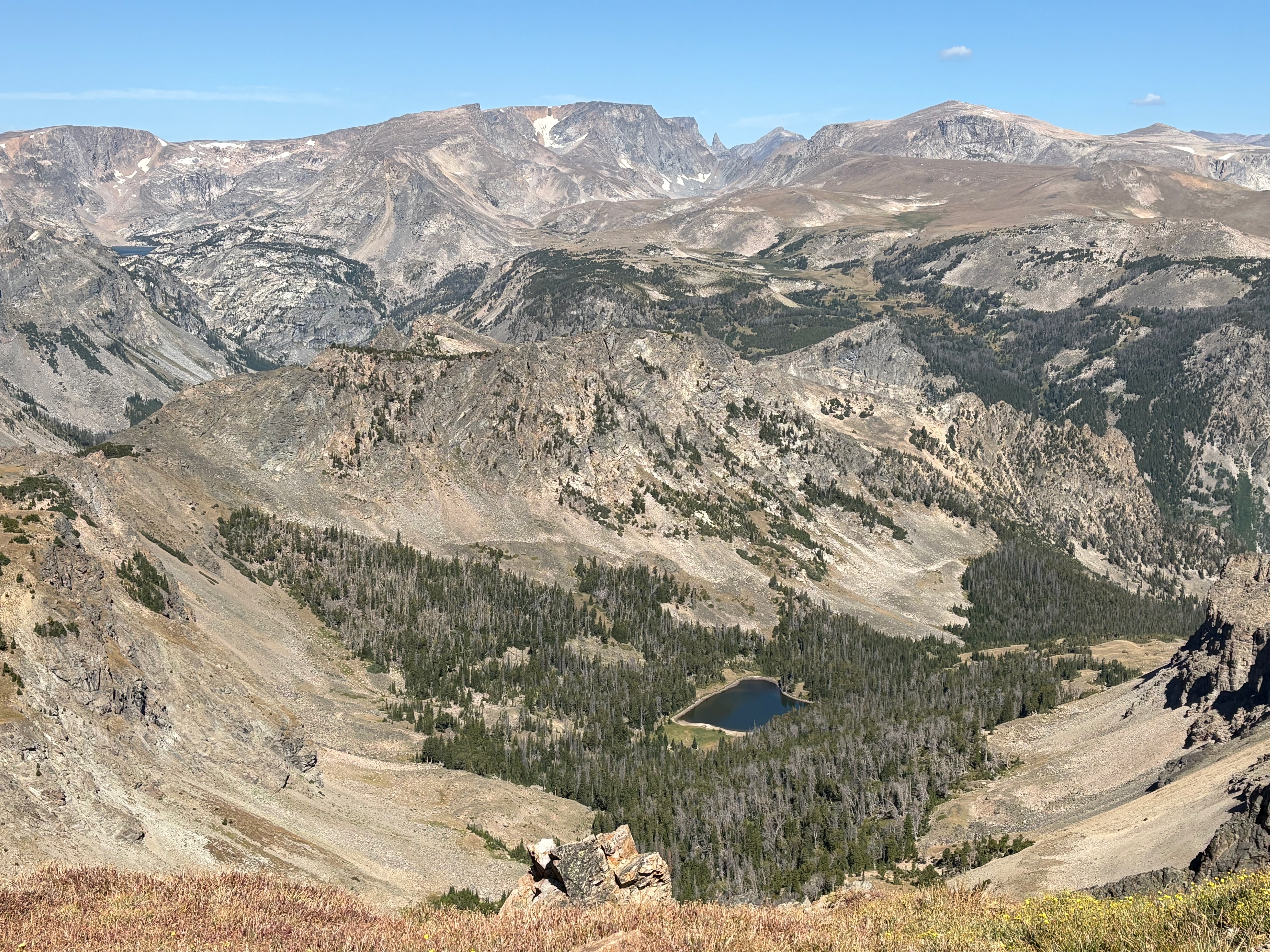
The Beartooth La Femme is a fully supported, women-only cycling event that starts and ends in Red Lodge, Montana. As the name suggests, the route follows the iconic Highway 212—also known as the Beartooth Highway—to the summit of Beartooth Pass, which sits at 10,947 feet above sea level. This stretch of highway is paved and well-maintained, and includes sharp switchbacks and beautiful views of the Beartooth Mountains as it meanders between Montana and Wyoming. It’s a legendary route, and this event offers a rare opportunity to ride it in a supportive, women-centered setting.

Here’s what made the Beartooth La Femme a standout experience for me:

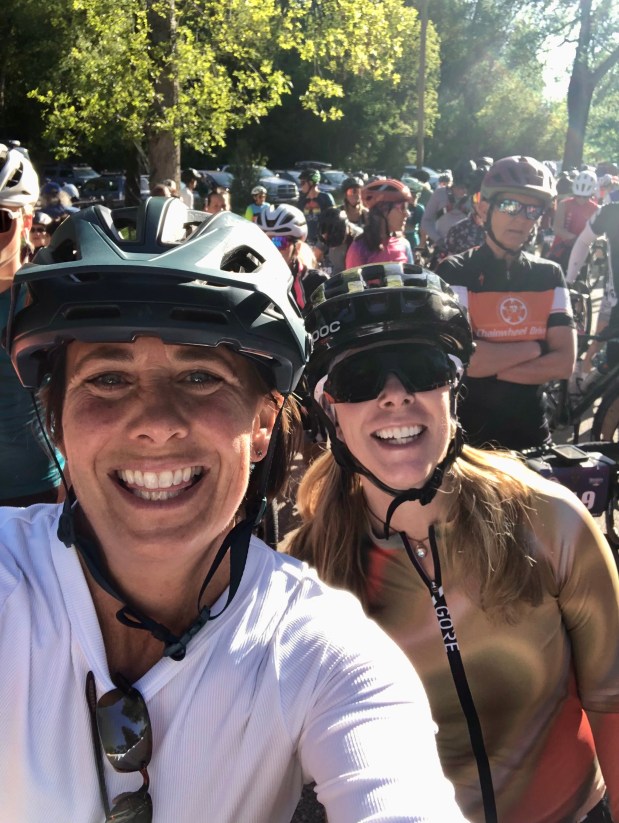
1. This event is limited to just 75 women, which keeps things intimate and, more importantly, safe. Traffic on the Beartooth Highway can be significant—especially on weekends—so the ride is held on a Monday. The route begins in downtown Red Lodge and starts with a wide shoulder, which gradually narrows as the climb progresses and ultimately disappears near the summit. The organizers discouraged personal support vehicles along the route—something I really appreciated. If each rider had a support vehicle following them, it would only increase the traffic on an already busy stretch of road. And because the riders were all women, there were cheerful conversations along the way- until the air got thin.
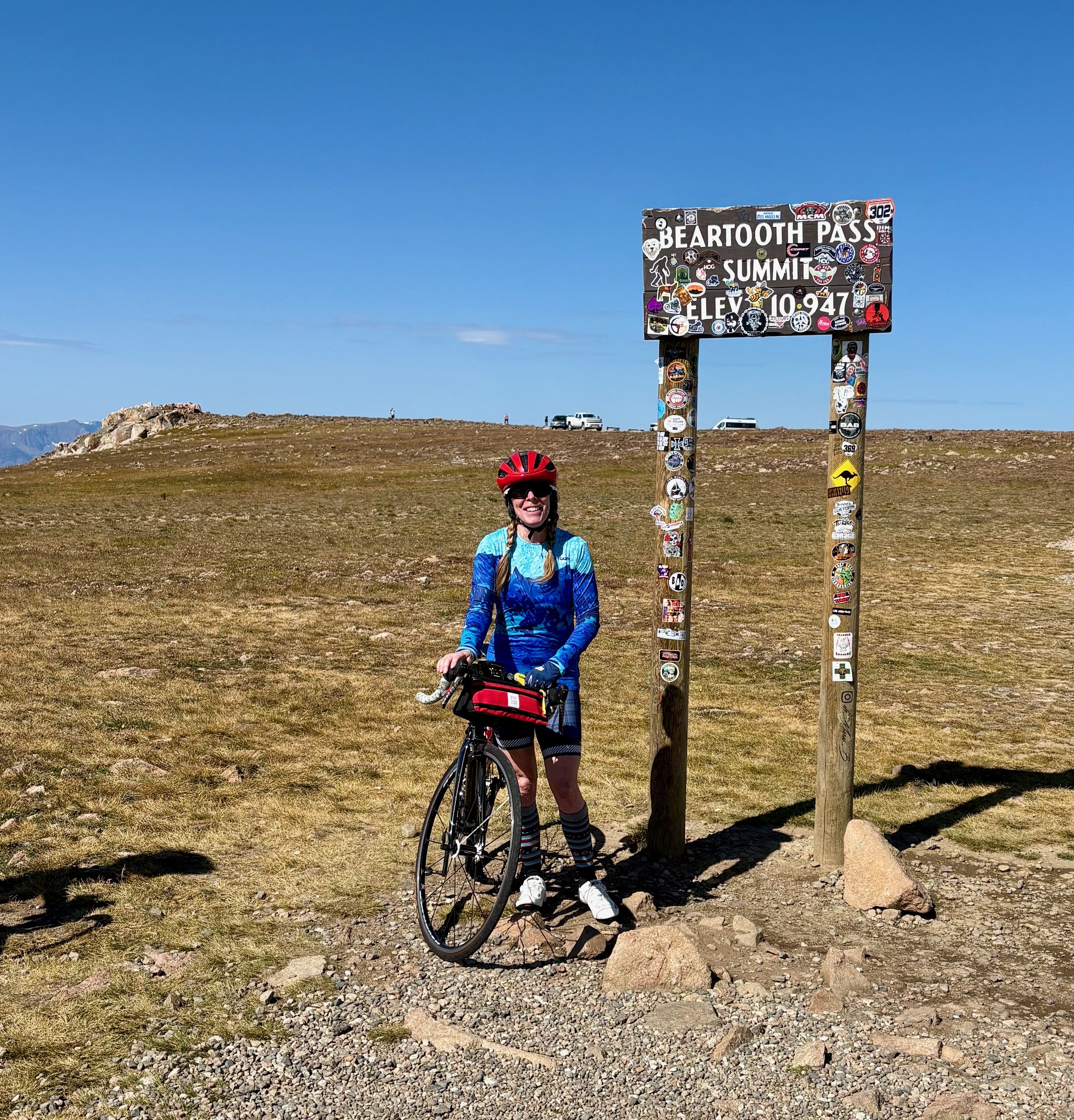
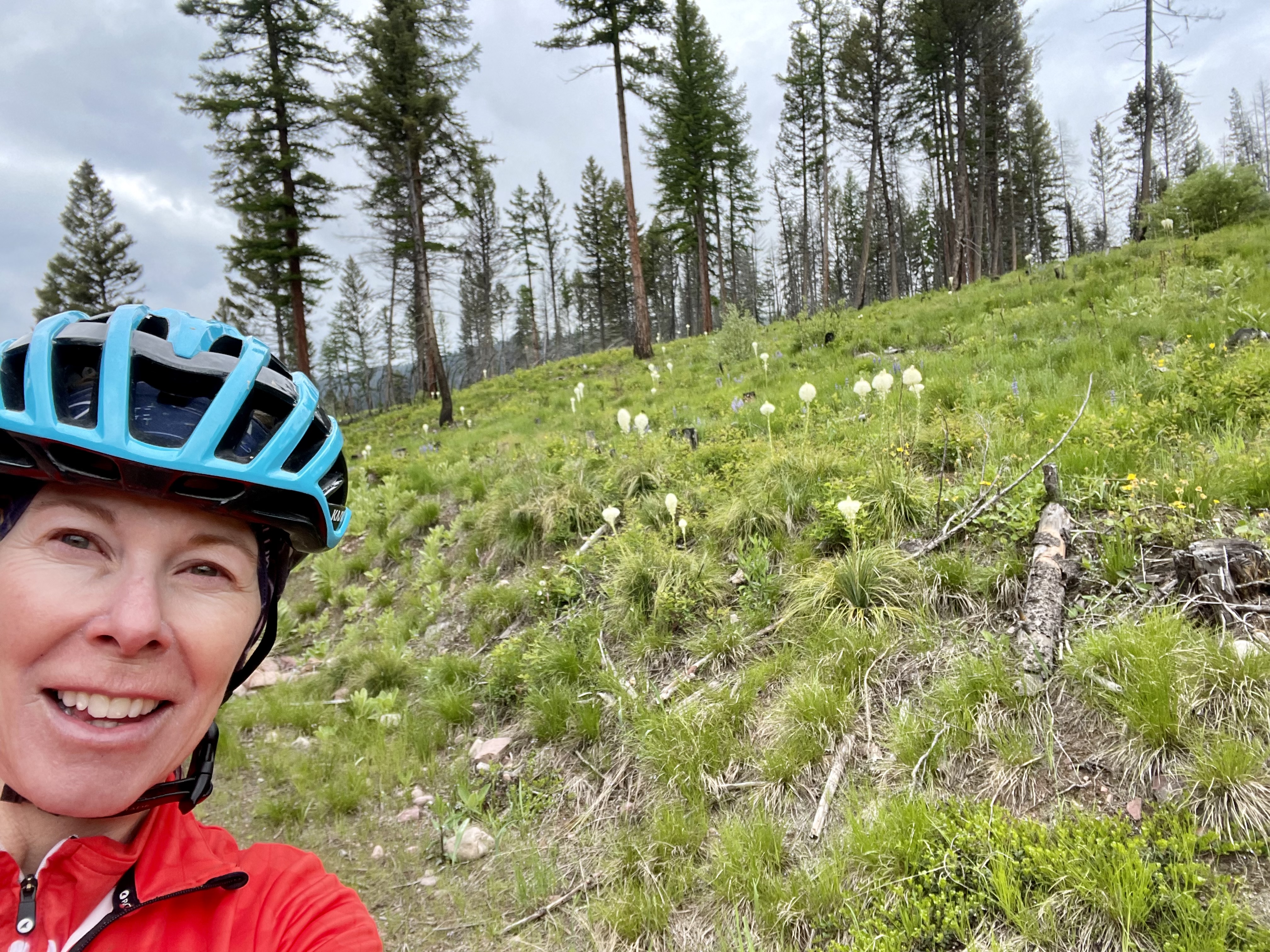
Me in the beautiful cycling top at the summit

2. The registration fee included a pre-ride dinner of pasta, salad, and dessert at the charming Pollard Hotel. It was a great opportunity to meet and connect with other riders. The dinner also served as a briefing session, with organizers providing detailed information about the next day’s weather, traffic expectations, route conditions, and support options.

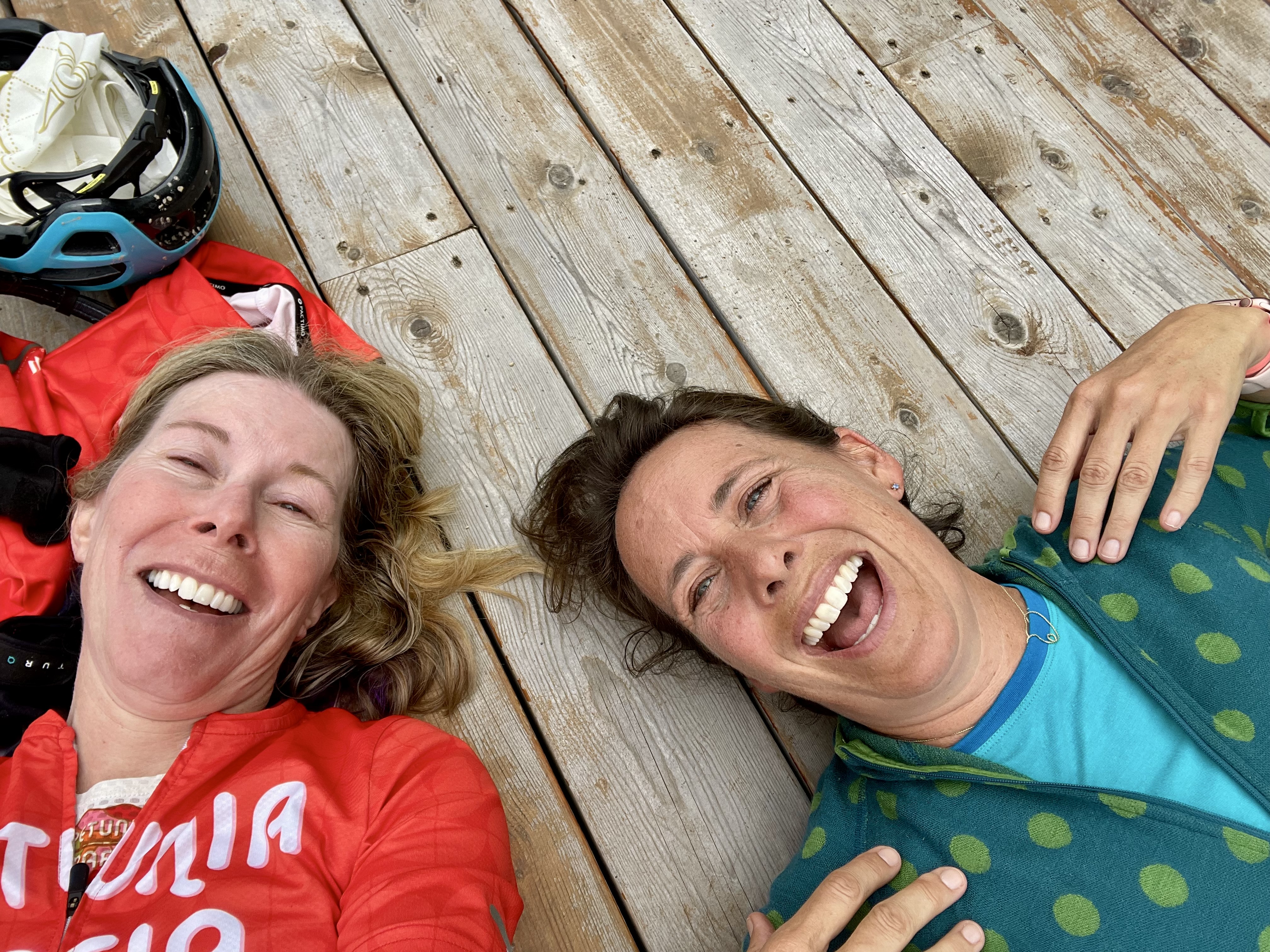
3. The registration fee also included a cycling top. I’m not usually fond of jerseys that come with registration fees because they’re often lower qualit than what I would normally purchase. However, the Terry Soleil cycling top is exceptional. It features a beautiful custom print of the Beartooth Mountains, UPF 50 fabric, and three generous rear pockets. It’s now one of my favorite pieces of cycling gear.

4. From pre-ride communication to on-course presence, the support for this event was phenomenal. Aid stations were well-stocked, and the mobile SAG vehicle made multiple passes along the route. It was reassuring to know that if I’d needed help along this 60 mile route, it was never far away. The organizers moved the start time for the ride up by thirty minutes because afternoon thunderstorms were expected, and at 10,947 feet, rain can quickly become snow. Some riders were forced to turn back as the weather moved in.

The Beartooth La Femme is more than just a bike ride—it’s an empowering, well-run, and beautifully scenic challenge designed with women’s safety and camaraderie in mind. If you’re looking for a high-altitude adventure surrounded by supportive energy, this ride absolutely delivers.
The Dead Swede – A Race Review

The Dead Swede – A Race Review

I’ve driven through Sheridan, Wyoming more times than I can count. I’ve been going back and forth between Billings and Laramie, Cheyenne, or Denver for more than half my life. I always thought that the scenery around Sheridan was so green and beautiful. When it came time to plan the annual cousin’s ride, I was looking for an event somewhere between Denver and Bozeman. I was thrilled to find the Dead Swede right there in Sheridan.

The event offered 100, 60, and 40 mile route options. They even had a 20 mile option for beginners and families… what’s that saying about starting ’em young? We opted for the 40 mile route and registered back in February. Leading up the to event, there were only a handful of emails from the organizers, which I appreciated. Packet pickup was the day before rather than the day off. While that might eliminate some of the race day chaos, it pretty much requires that participants book some form of lodging for one night.

I loved that the event started and finished at Kendrick Park, right there in the heart of town. These lovely creatures were grazing on the hillside overlooking the park as we lined up at the start line. Our wave departed at 8:00 AM. The course headed west on a paved gradual climb for about nine miles. Then the course turned north onto the gravel nestled along the base of the Bighorn Mountains and the biggest climb of the route began.

Shortly after that climb was the first of three very well stocked aid stations. The aid stations were positioned about every 10-12 miles or so. The second aid station offered pickle juice shots, and the third aid station offered bacon and PBR. I skipped the beer but had two slices of bacon. The organizers clearly communicated that cars shouldn’t be on the course providing services to riders – that’s what the aid stations were for. This was for rider safety, and to minimize the dust in the air. I thought this was brilliant and would love for other gravel events to take a similar stance. Of course there was a car here and there, but they didn’t kick up the dust like I have typically experienced when riding on a gravel road. I’m not sure why this was – perhaps it rained the day before, perhaps they use oil on the roads?

After crossing the finish line, racers were greeted by cheering crowds, a band in the amphitheater, and the smell of delicious barbecue. Overall, it was a very well marked course, communications were optimized, and the process from registration to packet pickup to post meal collection was seamless. Registration fees included a very cool Dead Swede t-shirts, sticker, and pint glass. I highly recommend this event!

Bacon, Bears, and Bikes

Bacon, Bears, and Bikes

A trip to ride through vineyards in Tuscany was initially suggested. Yet we found ourselves in remote Montana on a chilly, overcast Saturday morning in the company of bacon, bears, and bikes. How did we get here? When did this all start?

It all started back in 2010, when life forces a person to shift gears and adapt to what remains; in other words, life has a way of bringing people together. The biking part of it all started back in 2016, when two cousins decided to take a bike ride through Yellowstone National Park. We had pledged back in 2016 to make the get together an annual, or biannual, event at the least. Then life got in the way, including a pandemic, so we never had another adventure… until 2023.

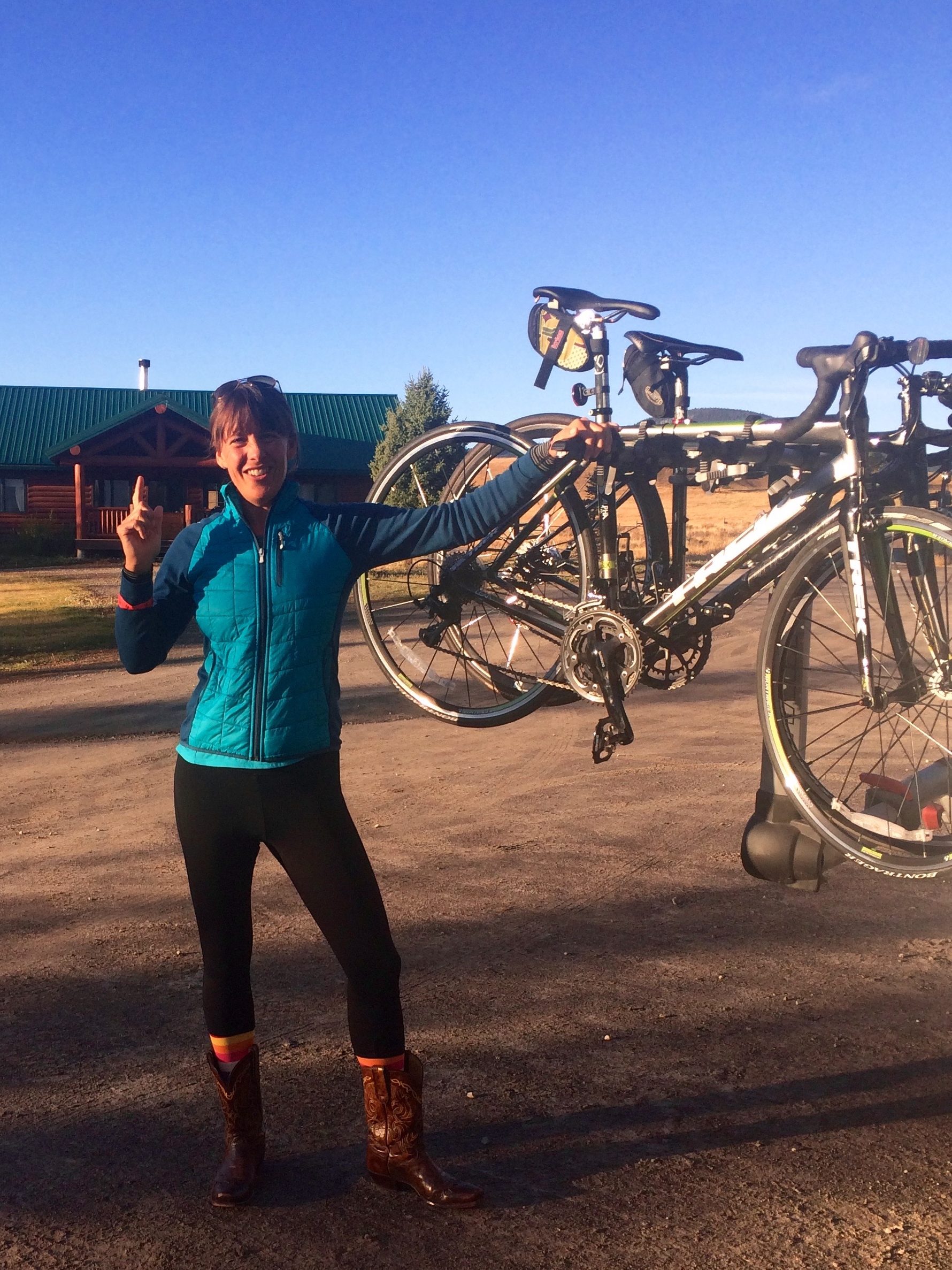
I don’t anyone else who can pair cycling apparel with cowboy boots, and make it look good!

As we prepared for departure to Ovando the next morning, there was a lot of discussion about bacon. Not only did we have bacon for breakfast, but KMax decided that bacon would be her snack of choice during the Dusty Bandita. She also decided that having bacon loaded jersey pockets, warranted a bike bell, to alert the grizzly bears that she was coming… in case they couldn’t already smell the bacon. It was at this moment I knew the grizzly bears were not a concern for me. I just had to be faster than KMax. So we left Bozeman with a cooler full of bacon, stopped in Helena to pick up a bike bell (and see Aunt MJ), and headed to Ovando for packet pickup. The further north and west we went, the harder it rained. We opted to stay near Seeley Lake on Friday night, which was about a 40 minute drive from Ovando with the road construction.

On Saturday morning, we arrived in Ovando about 45 minutes before the race started at 10:00 AM. The skies were gray, and eventually let go with a steady but light rain. I had somehow managed to leave most of my cold weather riding gear back in Denver. I’m still a little puzzled by how that happened, but I think my intention was to go back and add it to the gear bag, but I forgot to circle back. (Rookie move!) There was some discussion about abandoning the race and going over to Flathead Lake instead. But we decided that we had to at least give the race a chance and ride for a few miles before completely abandoning it. Besides, I didn’t drive all that way with bike gear, to not use it!

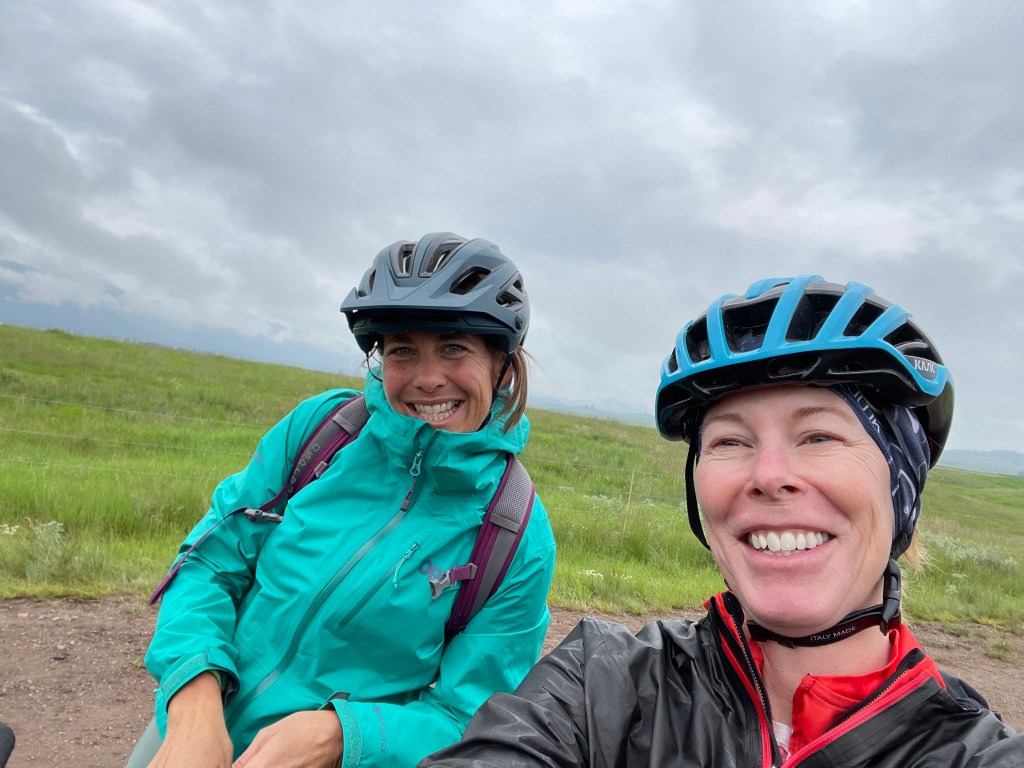
The first couple of miles were sloppy as the rain continued its steady descent onto the dirt road. But within 5 miles or so, it tapered off and we were left with decent temperatures under overcast skies. It ended up being perfect riding weather: not too hot, not too cold, just right! This picture shows the two of us at the first aid station, snacking on bacon, and other tasty and salty treats! This was a fairly remote section of the race and if there were bears to be seen, this would have been a place to see them. Alas, the only sign of bears that day was the huge pile of scat on the road. The aid station was at the base of the climb, and this is where KMax and I split up to ride at our own paces.

All the moisture over the winter left behind meadows bursting with wild flowers and green prairie grasses. I had to stop several times to take it all in, and some pictures! Our parade most certainly got rained on that day, but there was no shortage of smiles and laughter. Oh, and we still went Flathead Lake anyway!

It’s a Sign!

It’s a Sign!

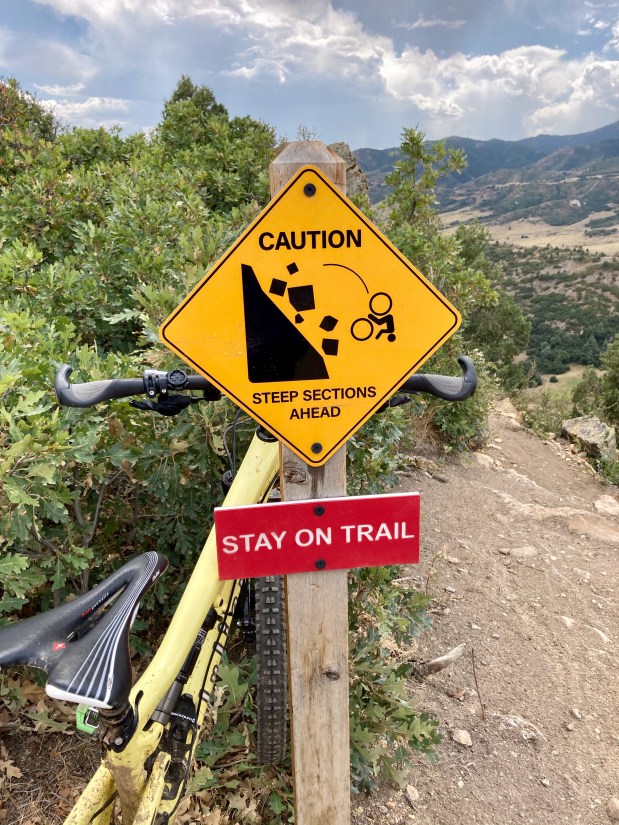
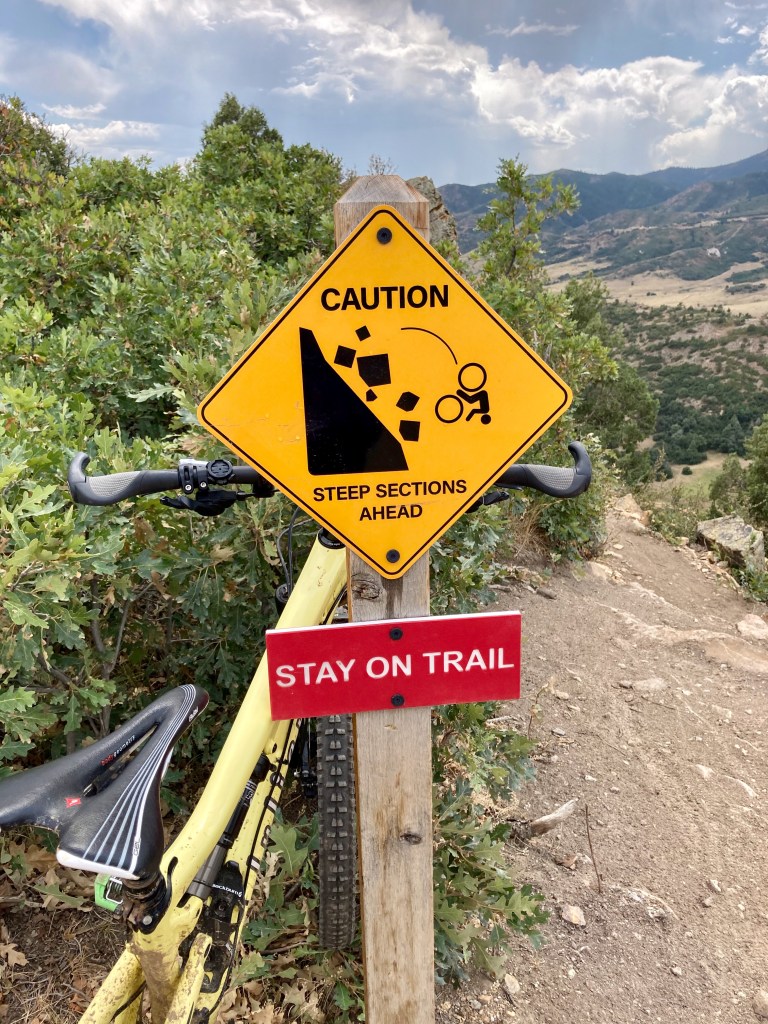
Signs, signs, everywhere there’s signs, or so the song goes. I’ve encountered a variety of signs over the years as I’ve been riding. Some are funny, some are serious, and some are more memorable than others. Here’s a fun one from the Black Bear trail:

Needless to say, I did stay on the trail.

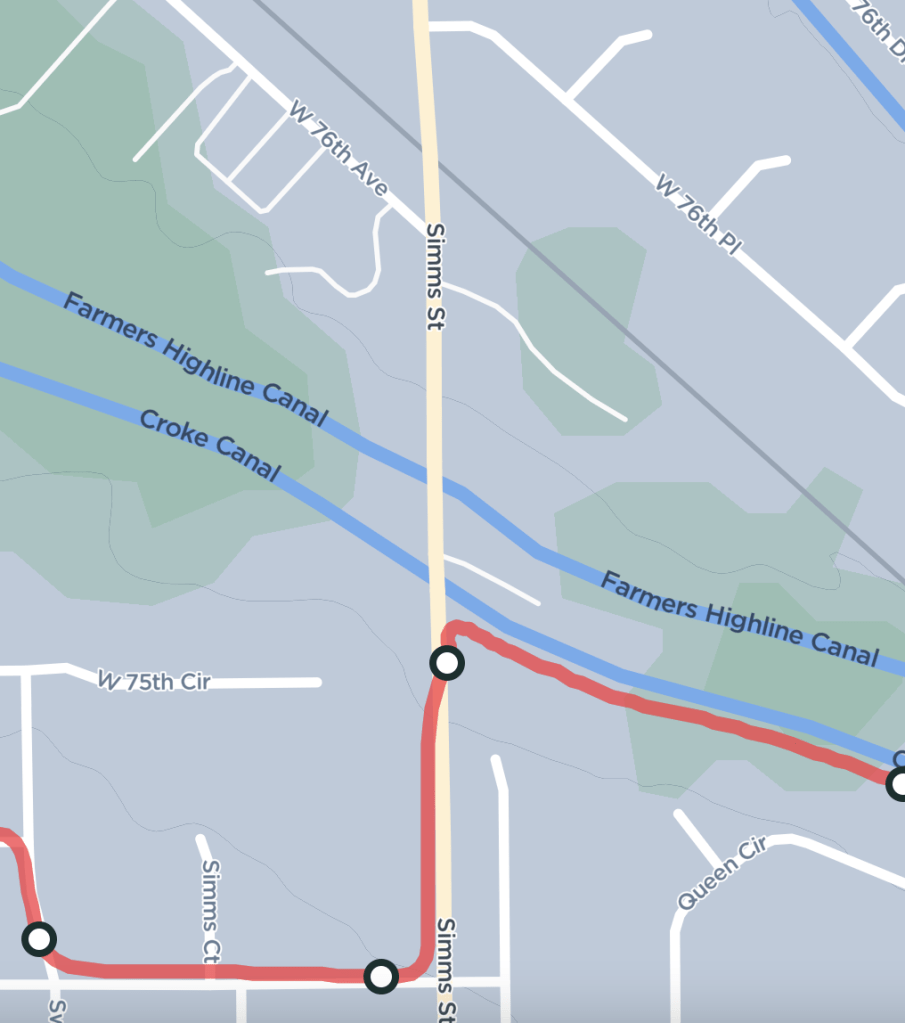
Where I live in northwest Arvada, there is a canal system that includes two canals running parallel to one another (Farmer’s High Line Canal and Croke Canal). The canals are paralleled by a dirt access road. When I was a runner, I often ran along a certain section of the canal with my dog, Loki. Eventually I stopped running, started biking instead, moved and didn’t return to that section of canal for several years.

Then there was a pandemic. I began to look for new, car free places to ride my bike and eventually came upon a route that included this section of canal where I had run with Loki so many years ago.

The route actually follows the canal roads, until the gates prevent access. Normally, I just ride around on the public streets as a workaround, but I found myself with a little extra time on my hands the last time I rode this route. I decided to give the phone number listed on the sign a call. Sure enough, it’s a legitimate number for Farmers Reservoir & Irrigation Company. They’re located over in Brighton, Colorado. The receptionist who answered my call transferred me to a gentleman I will call John*.


Initially, John had no idea where the gates were or why they would be present. As we talked, he was looking on a map trying to pinpoint my exact location, which was on the west side of Sims Street, south of the railroad tracks at 76th Street, right at the Croke Canal road. I emailed him the same picture above and here’s the response I received “I just spoke to my Leadman who handles the Croke Canal. This is FRICO’s gate. Not sure why it is there. If you want to continue riding your bike, I think you can easily go around the gate. There probably isn’t anymore gates past this one.” My conclusion with this response was that I could bypass the gate and carryon along the canal road.

As it turns out, there are more gates. But this gate and the next gate to the west are the only gates that include the No Tresspassing sign. I responded to John with a picture of the next gate, pointing out the barbed wire that adds emphasis to the threat. I just wanted to understand why there was unobstructed access to the canal for miles before this section, and then suddenly the gates. His response to my follow up email was much less friendly. Here it is in part “These gates are ours. They are to restrict access from pedestrians and vehicles as it is private property. These roads are used to maintain our canals. Like I said yesterday, technically you are trespassing by riding your bike on our access roads.  They are not for public use”.

So there it is! I can’t help but think of the rest of the song lyrics: do this, don’t do that, can’t you read the sign?? Having unencumbered access to this canal road is such a missed opportunity for the citizens of west Arvada. In a city with so many two lane roads that do not have bike paths or sidewalks, this is a safe, traffic free alternative for walkers and bikers alike. The Farmer’s Highline Canal offers 71 miles of park space throughout the Denver metropolitan area. It’s a shame that the City of Arvada hasn’t partnered with Farmers Reservoir & Irrigation Company to make a similar trail system available to its residents.

Notes:
* John is not John’s real name.

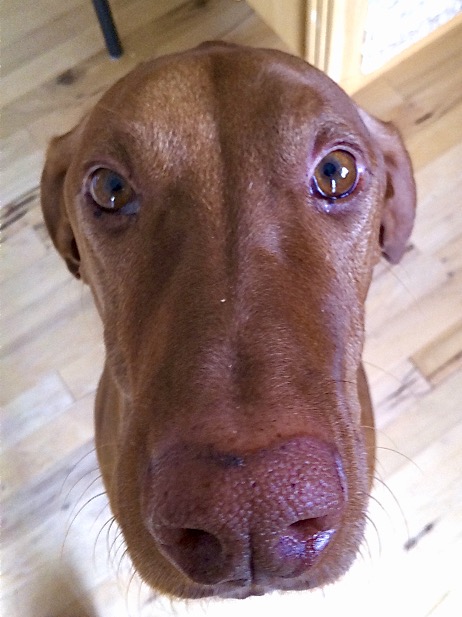
Loki somehow managed to be all head in this picture from his running days. He was a good friend.

The Truth About E-bike Trail Access

When I met Motoman 25 years ago, I quickly learned that he was an adventurer. Our weekends consisted of rock climbing, mountain biking, and jet skiing, among other activities. At one point I joked that I needed to return to work on Mondays so that my body could sit at a desk and recover from the adventures of the weekend. Fast forward to today, and he still loves a good adventure, but the activities involved in the adventures look a little different. Over that span of 25 years, there have been injuries, crashes, not to mention the under appreciated impacts of aging in general – all of which have impacted mobility.

During the pandemic, Motoman purchased a class 1 e-bike as a way to spend a little more time with me, a little more time outdoors, and for a different form of exercise. I’m not writing this post to educate the world on the classes of e-bikes, but I will say that the class 1 is the only e-bike that REQUIRES pedaling to move forward. What we weren’t aware of when he purchased the bike, was the magnitude of controversy surrounding the different classes of e-bikes and where they are allowed and not allowed. This is an entirely different conversation from the riders who are simply anti-e-bike. But speaking of anti-e-bikers, we’ve certainly encountered plenty of those people on the trails. Imagine taking your new e-bike out for its maiden voyage and having a complete stranger call you names like “cheater”, or worse.

Nowadays on our mountain biking adventures, he follows me. I set the pace for our little peloton of two on my old Juliana – the kind without a battery operated motor. We do this because one of the objectives of purchasing the e-bike was to spend more time together. My pace is the limiting factor between the two bikes, so I lead the way. Occasionally, he’ll pass on a particularly steep or technical section of trail, but then he waits for me to retake the lead. I share this because I think it’s important to know that not all e-bikers are out on the trail to go faster than everyone else.

We learned very quickly that it’s difficult to know where e-bikes are allowed and not allowed to be ridden. Websites* that we have used for trail discovery and research are not always up to date with the latest information. Case in point: the 18 Road Trail System in Fruita, Colorado. As of the time of writing this article, those websites* indicate that e-bikes are not allowed. The BLM website for this trail system does not mention e-bikes. Yet, I took this image onsite at 18 Road during my trip in June of 2022. Clearly, Class 1 e-bikes are allowed as of April 8, 2022.

In other instances, our ride research has led us to a trail head, only to find that the signage at the trail head prohibits e-bikes. This is particularly frustrating when you’ve driven miles to the trail head. I have wondered at times if the trail head signage hasn’t been manipulated by trail users who are anti e-bike. I have encountered signage manipulation against motorcycles in the past, so it wouldn’t come as a complete surprise to see such behavior directed at e-bikes.

As a result of this mixed information, some folks are opting to ride their class 1 e-bikes on trails where they are prohibited, stating that they’ll take their chances on getting caught. We tend to ride in places that we know without a doubt allow e-bikes. We also make a conscious decision against spending our dollars in municipalities and counties that ban class 1 e-bikes on their local trails. Does this little boycott have any impact on anything? Absolutely not. But it does make us feel slightly better about being banned.

The categorization of Class 1 e-bikes as a “motorized vehicle” seems to be the root of the problem. Some places prohibit all motorized vehicles, and I understand what they were getting at when the rule was made. Bike manufactures, or whoever the gods were that decided to call e-bikes “motorized vehicles”, really did a dis-service to users of class 1 e-bikes. These are truly pedal assist bikes that open up cycling opportunity to people with mobility limitations. I’m no lawyer nor do I play one on TV, but I suspect at some point there will be a legal challenge that the “no motorized vehicles” rule discriminates against people who use class 1 e-bikes as a means of adaptation to a disability.

Vehicles have evolved since those rules were created. I know our government can be slow to adapt, but maybe it’s time now for their rules to evolve so they can be appropriately applied to newer technologies that didn’t exist when the rules were written. Let’s be realistic, e-bikes aren’t going anywhere… except maybe faster than you!

* Websites that serve as a database of biking trails with reviews, ratings, commentary, and downloadable gpx files shall not be named in this article.

The Great Sand Dunes: Lessons in cornering, sand, and stream crossings

Recently, as Motoman and I watched the evening news, we learned that Medano Creek in Colorado’s Great Sand Dunes was running at record highs.  I looked at him and declared that we had to go see it for ourselves.  We’d taken our daughter to the Sand Dunes as a little girl and had such fond family memories.  With that, a vague plan was formed to ride dual sport motorcycles the following weekend to the Great Sand Dunes and camp on a mountain top.  My only stipulation to Motoman was that we spend only one long day on the backroads either going there or returning home, but not both.

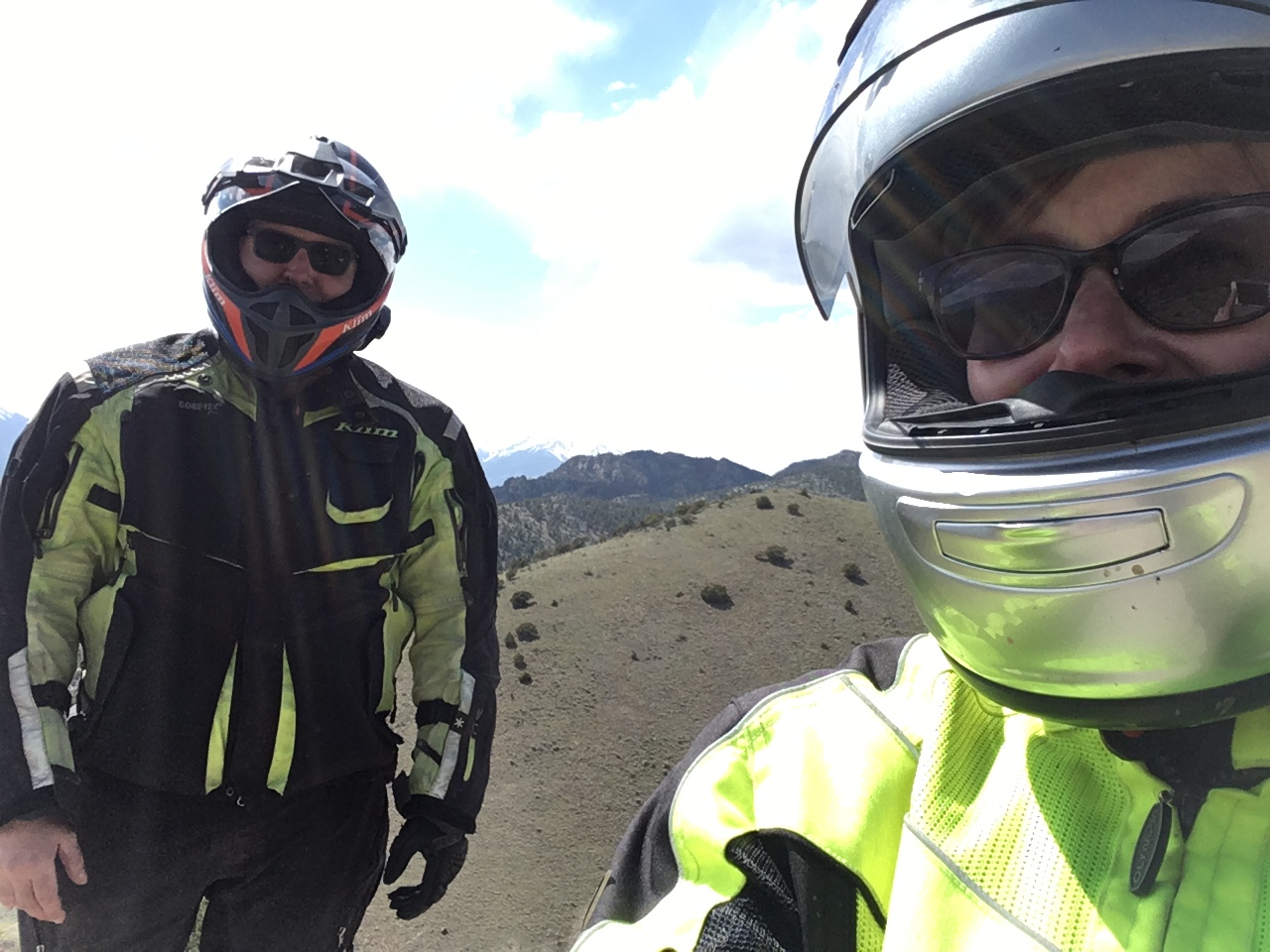
We departed on the dual sport motorcycles Saturday morning heading south from Arvada to Sedalia, via the big concrete slab.  After turning west at Sedalia, it was a mix of dirt and gravel roads for the next 134 miles to Salida.  The open roads presented ample opportunity for practicing cornering at speed… or “speed” in my case.  Motoman is so fullsizeoutput_4d42much faster than I will ever be on a motorcycle.  I’ll be forever grateful to him for riding in front of me to illustrate technique and for riding behind me to speak technique into my ears and guide me through corners via the Sena device broadcasting within my helmet.  There were enough miles and curves between here and Denver, that I believe the technique may have finally stuck.  My struggle with technique on the dual sport has been the simple fact that I ride so much.  I ride a road bicycle, a mountain bicycle, a cyclocross bicycle, a street motorcycle, and a dual sport motorcycle.  Each of these has a specific technique based on the terrain.  Using the wrong technique on the wrong bike on the wrong terrain can have disastrous results.  And truthfully, sometimes it’s hard to remember which technique to use because I forget which bike I’m on.

After all this fun cornering practice and dinner in Salida, we finally made our way to the Great Sand Dunes rather late in the day.  The original plan was to frolic in the creek and camp along Medano Creek Primitive road in the Preserve as we had done so many times years before.  This requires passing through a substantial sand pit to get there. In the past, we had done this in a 4WD vehicle.  On this trip, we would be passing through this sand pit on dual sport motorcycles.fullsizeoutput_4d45

Have I mentioned that I don’t like riding through sand?  It is second only to my dislike for riding through deep mud puddles.  I’m told that the technique to utilize when riding through deep sand on a dual sport motorcycle (or cyclocross bike) is to weight the back wheel and lighten the front wheel so that it sort of floats through the sand.  I found that by placing my body weight on the seat of my dual sport and pulling on the throttle led to a whole lot of nothing. I’m sure this technique works great for motorcycles with more aggressive tires than what I was using.  In order to move forward, I had to essentially ride my motorcycle like a stryder bicycle for kids  through deep sand.  I’m so proud to report that I made it through that sand pit and only dropped the bike a handful of times.  At least the landing was soft and I was able to pick the motorcycle up myself and carry on.

We soon found ourselves in the dark and at a place where we had to make the first of a series of deep stream crossing, or turn back and struggle through all that sand again.  As I sat on a log and waited for Motoman to return from scouting out the road ahead on the other side of the creek, a camper, AKA “Ranger Dude”, from a nearby campsite approached.  He informed me we could not camp where we had temporarily parked the motorcycles.  He went on to say he had seen 2 jeeps attempt the water crossing in front of us and turn back.  I honestly don’t know why he felt compelled to offer this unsolicited commentary.  I told him we were scouting out the situation and would not be camping there – especially if it meant we would be next to his unhelpful soul.

When Motoman returned,  we considered our options and agreed that continuing east on Medano Pass road and putting as much distance between us and Ranger Dude was our best option. It was dark. We were tired. We just wanted to set up camp and go to sleep. We’d lost count of how many water crossing there were, but our best guess is 10.  We made camp high on a mountain top, saw the spectacular milky way, and had an unrestful night’s sleep.

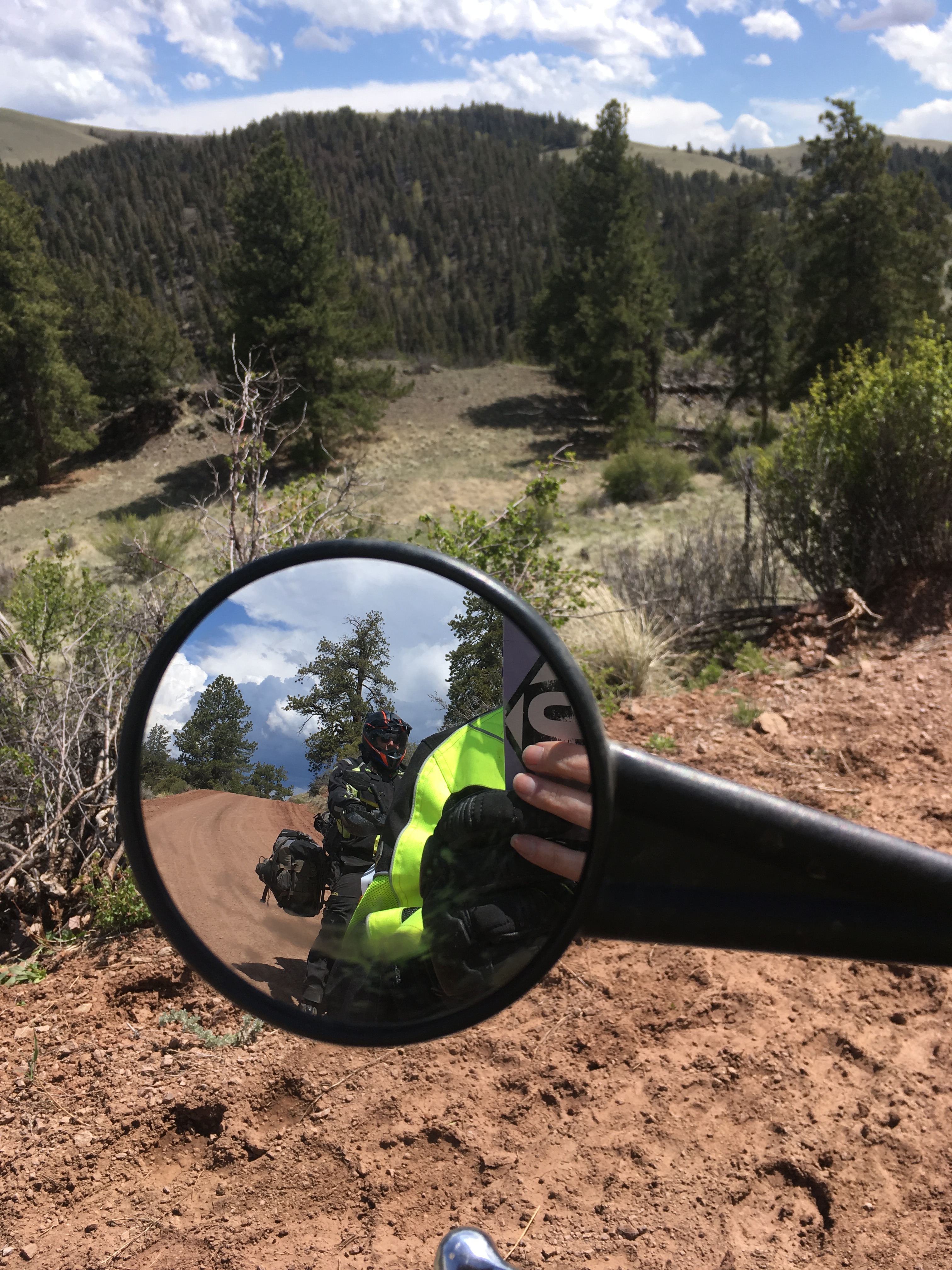
The next morning we awoke to birds chirping and not another soul in sight  As we continued east, we encountered maybe 5 additional water crossing that continued to get deeper and deeper. At each of the crossings, one or both of us would dismount and wade through the water to figure out the shallowest path through.  We were also checking for rocks or any debris that might create a hazard.  On the deepest of the crossings, we removed pannier bags from Motoman’s KTM and walked bikes through the water on the shallowest path.  Water was hip high on my small frame at its deepest.  Finally, the earth began to drop away as the descent began; the water was finally behind us.  Eventually, we made it to Colorado Highway 69, which is probably the smoothest stretch of road I have ever encountered.  It was smooth sailing until I ran out of gas a half mile from the Shell Station in Westcliffe.

Remember at the beginning of this story when I mentioned that the reason for this trip was due to the record high levels of Medano Creek in the Sand Dunes?  We’re still trying to figure out how two reasonably intelligent adults failed to consider that the ENTIRE creek would be running fast and high, not just the section in the Sand Dunes.  The road is now closed at the very first crossing due to high and fast water as the Spring thaw continues.

Click here to see our route via a relive video.

IMG_3684IMG_3681IMG_3678

The Ride When I learned a Skill After I Needed it

Riding from our house in Arvada, Colorado to the Rampart Range located in the Pike-San Isabel Forest just southwest of Castle Rock was one of longest distances I’ve ridden on my little Yamaha XT-250, AKA Dory.   The round trip (including the trails we rode) was approximately 120 miles.  After some discussion, Motoman and I decided to ride there because of the diversity of trails in the system and unlikelihood for mud.  It had snowed a couple of days before and we were hopeful that it would not be muddy.   It turns out that the OHV trails at Rampart Range are very similar to the mountain bike trails at Buffalo Creek in that they are covered with granite pebbles and sand, which tends to keep the mud to a minimum.

When we arrived at the Rampart Range Staging parking lot, I was surprised at how many vehicles were in the lot.  I became nervous about how many other riders I would encounter along a trail and how I would maneuver my motorcycle to share the trail.  Mountain bikes are so much lighter!  When Motoman asked me which trail I wanted to ride first, I picked a beginner trail, of course!  It was a twisty path through the forest with the occasional water puddle.  The trail was fairly smooth and the most common obstacle was tree roots, which are slippery when wet. It was an uneventful ride until we came to a 40 foot section of rocks on a downhill where I completely lost control of the motorcycle.  I had stood up for the descent and when I reached for the rear brake with my right toes, all I got was air.  I bounced down the trail, afraid to touch the front break for fear I’d go over the bars.  I had a death grip on the clutch and bars.  By the time I thought to release the clutch to slow down, I was at the bottom of the hill and came to an easy stop.  I don’t know how I didn’t crash.  We encountered only two other riders on this trail, despite that full parking lot.

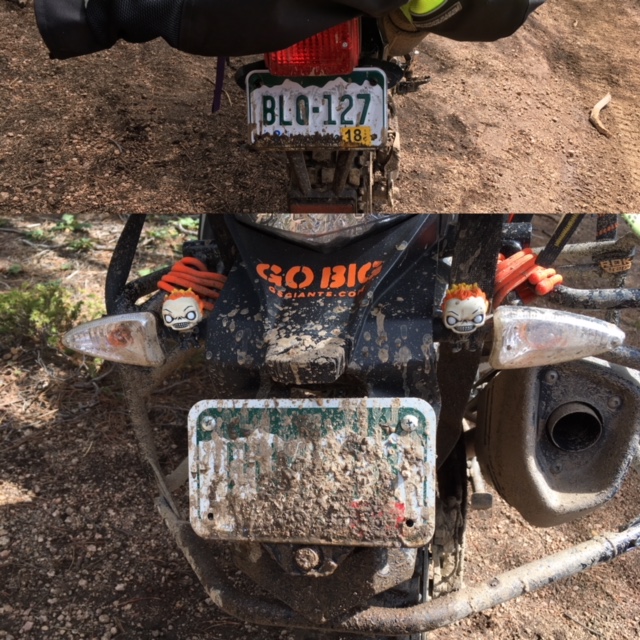
The trail ended and we found ourselves on the Rampart Range dirt road, which travels through the heart of the trail system.  It was here that Motoman taught me the rear brake  skid technique.  It works like this: get your speed up to about 15 MPH, pull in the clutch, let off the throttle, and step on the rear brake hard enough to skid.  We practiced this over and over, eventually seeing who could leave the longest skid mark on the dirt road. I wish we’d had this session before that first trail!! [Sidebar: now I understand why Motoman is constantly buying new tires.]

The next trail we did was still relatively smooth, but much muddier and hence slipperier.  The climbs and the descents were also steeper.  We found a beautiful rock formation and stopped for a snack and pictures.  On this trail, we encountered only two other riders.

It seems every time I ride the motorcycle, I learn something new.  This ride offered three valuable lessons. First, the skidding lesson has already proven to be a valuable addition to the toolbox.  I used it non-stop for the second trail we rode that day.  Second, I don’t like riding in mud.  Third, speed is helpful.  If I’d applied the brakes during the rocky section in the first trail, I suspect I would have gone so much slower that I would have crashed.  The fact that I took that section at speed kept me from getting a wheel hung up on a rock.  I’ve replayed that section in my mind a number of times since the ride itself, and words from my fearless daughter keep coming to mind:

“Sometimes you just gotta give it gas and hang on.”

45763045-0159-4908-9A75-22A162644A51

Nederland CX – A Race Review

Nederland CX – A Race Review

As I drove up Highway 72 to Nederland, I wondered just what the course for this inaugural Nederland Cyclocross race would be like.  The race flyer stated that the race course would wind through the heart of the town and include a mix of cyclocross features.  What exactly, did that description mean?  As visions or stairs and other urban cross features floated through my head, I parked and made my way to the registration tent.

The first feature I noticed was a very sharp, uphill turn onto a covered pedestrian bridge over a creek.  After retrieving my race number, I walked a bit more of the course.  I noticed another bridge and some railroad tie barriers.  I made some smalltalk with a woman nearby.  The topic of conversation quickly came around to the race course.  She mentioned on the other side of the course, that if you didn’t take the right line in one section, you were sure to end up in the lake.

At that point I decided it was in my best interest to get my bike out of the car and take a pre-ride of the course.  I didn’t mind getting dirty, but I certainly did not want to land in a lake astride my bike.  Once the current race was over, I pedaled on to the course.  I ended up behind another guy who must have already raced, because as we rode along, he told me about what was coming up around each bend.  In this section of the course that wound along the creek, the vegetation was so tall that you couldn’t see what was coming until you were there.  The first surprise was a sharp left turn.  The next surprise was a path of beaten down cat tails.  The mud below the cat tails was now being churned up by all the bike tires.  At the end of the cat tails was a steep run-up.

The next part of the course was the hard part: two- three off-camber ups and downs on loose dirt, and the steepest, loosest run-up ever.  This was followed by the steepest, loosest descent ever seen (by me!) on a cyclocross race course.  It was during this descent that I came upon the place where landing in the lake was supposedly a certainty if one were to take the wrong line.  My conclusion was that landing in the lake was only a remote possibility under the worst set of circumstances.  At the end of the lap, I began to question whether this race was something I could actually finish, let alone be competitive in.  I’d been nursing a sore shoulder all week and it would be impossible for me to shoulder the bike in any of the sections where it would make sense to do so.  I’d have to run the bike and lift it over the barriers when necessary.  I considered packing my bike in the car and going home right then and there.  Then my phone rang and Motoman wanted to know if it was raining in Nederland?  I looked up at the threatening skies and thought how miserable this course would become if the skies were to let go.

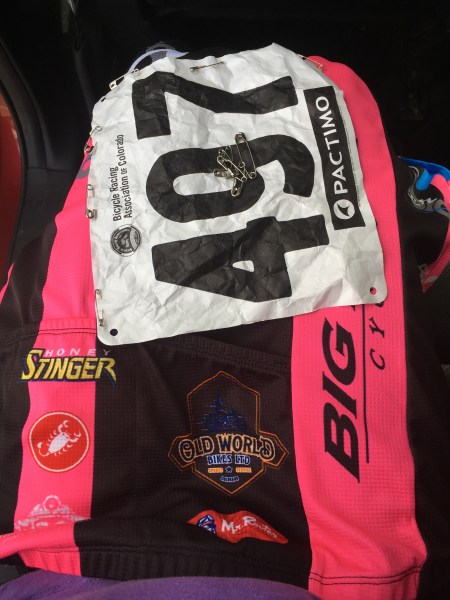
When Motoman arrived, I mentioned how hard the course was and that I was IMG_0925contemplating leaving.  His response was that it would be just as hard for everyone else as it would be for me.  As I pinned the number to my jersey, I thought to myself that I’ll just ride it; then I won’t have any expectations nor disappointment about how I finish.  Then we got a FaceTime call from our daughter who we hadn’t spoken to in a couple of days. It proved to be the perfect distraction.  When we hung up, I had only about 30 minutes before the start time to pedal around and half-heartedly warm-up.  Besides, who needs to warm-up for ride??
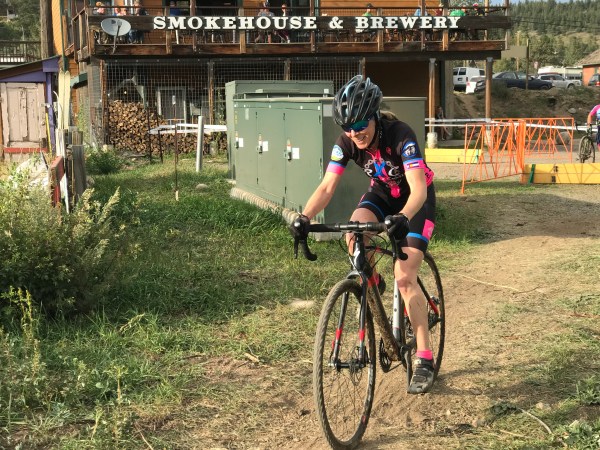
Promptly at 5:10 PM, the race started and we were off!  Racers were still rather clumped together when I reached the hard part of the course.  A crash in front of me forced me off the bike and to run more of the off-camber section than I would have liked.  However, as I trotted along, I realized that the women who were riding weren’t going any faster than I was.  I had started to run with my bike because I didn’t want to stop. But now that I couldn’t find a decent place to remount, I just kept going.  Two thoughts occurred to me as I finished that first lap 1) I did not want to run as much on the next lap and 2) this race was as hard for the other women as it was for me!

IMG_2136

Photo Credit: Cid Dennis

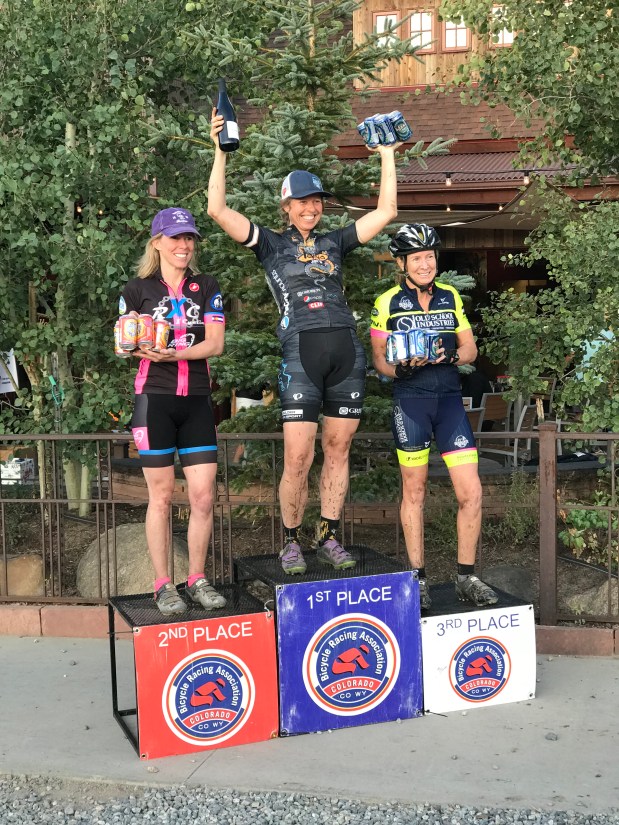
I dug in and settled into a pace I could sustain for five more laps.   I’m so proud to have finished such a difficult race!  Taking 2nd place was the icing on the cake!


Not only was this the hardest race I’ve finished, it was also the most expensive:

  1. Entry fee: $30
  2. Deductible for car repairs necessary from colliding with black bear on the way home: $750
  3. While tasty, the six pack of beer only drowned my sorrows temporarily.

    IMG_2151

    Master’s Women 40+, 2nd Place Photo by: Cid Dennis

    IMG_0948

    That’s black bear fur stuck in the wheel.

12 Bike to Work Days

Arvada is a wonderful place to live.  There isn’t much between my house and the foothills, although what’s there is gradually filling in with houses.  I love the rural feel of this community.  Seeing horses and other farm animals and wildlife on the way to the grocery store reminds me of my days back in Billings, Montana.  Many of the streets in this area are still two lane country roads.  All that quaintness gets tossed out the window, however, when you come to an intersection like Indiana & Leyden Road on any given school day at 7:10 AM. Those two lane roads can be backed up for nearly a mile in each direction as thousands of kids try to get to school at about the same time.  Combine that volume of traffic with sun glare and distracted drivers and it amounts to a risk that I wasn’t willing to take on my bike.  Like my daughter was counting down the days of school until she could sleep in, I was counting them down until I could ride to work!

Back in May, I set a goal to ride my bike to & from work 10 times before school restarted August 17th.  I rode to and from work once in May, five times in June, four times in July, and twice in August for a total of 12 commutes.  My mission was accomplished before August arrived.  What I didn’t expect when I started the commutes back in May was how many aggressive drivers I would experience on my 11 mile ride to Broomfield.  Here I had been thinking that the major safety concern was the volume of traffic at the intersection of Indiana & Leyden Road, when the real danger was the drivers I encountered on deserted rural roads before 7 AM.  In particular, Alkire Street between 88th and 96th Avenues and Simms Street north of Brocade Parkway to Highway 128 were where I experienced the most aggression.  I ended up calling in more drivers to the Colorado State Patrol in this two month span of time than I have in all my years of riding.  What was most frustrating about these encounters is that the majority of them occurred when there wasn’t an oncoming vehicle in sight…

Here’s the summary of my car vs. bike encounters during the last 12 weeks:

  • I was yelled at by a driver on Bike to Work day (June 27).  He informed me that I should be riding on a bike path.  When he finally took a breath, I interjected that I had every right to be on the road, to which he replied it was his right to run me over.
  • I was buzzed by a Federal Express truck driver on Simms Street just south of Highway 128.  I exchanged tweets with Fedex and like to think their drivers received a refresher on Colorado’s 3 foot law.  It didn’t happen again and there are MANY Fedex trucks in the area since they have a distribution facility right along that stretch of road.
  • I was honked at by a woman for taking the lane in order to avoid a three feet wide pothole in the road while descending at high speed.
  • I lost track of the number of drivers who insisted on sharing the narrow lane with me when there wasn’t another car in the opposite direction and they could so EASILY have given me just a few more inches. This particular behavior is most bothersome because it seems the underlying message is “I could get over, but avoiding a person riding a bike isn’t worth the energy it takes for me turn that steering wheel 2 inches.”

Surely, that’s not the case, right?  Maybe those drivers are new to the area and are unaware of Colorado’s laws; we do have lots of transplants here.  Here’s a little video that will help to educate you on the laws.  Oh, and when in doubt, give a cyclist more room than you think they need.  Sometimes we have to swerve, just like you do in your car.  Drivers don’t like it when other cars get too close to them, either.  Surely you can relate to  that?

The Golden Giddyup – A Race Review

2016 was the inaugural year of the Golden Giddyup.  You can read more about how it was founded on their website; they tell the story much better than I can.  I had decided not to do this race months ago when registration opened.  Then, a handful of days prior to the race, I met up with a friend who was not able to do the race due to a knee injury.  I figured she had already transferred her entry to some other person, but it turns out, it was still available.  When she asked if I wanted it, I checked my calendar and found the day to be wide open.   I had no excuse not to do the race and hated to see the entry go to waste.

Transferring the registration into my name proved to be a bit of a challenge.  While the registration page indicated that all you had to do was click a button and follow the instructions, it didn’t work for us.  After several attempts, we decided to contact race organizers for help.  Even with their intervention, I never received any confirmation emails indicating that the transfer had been successful.  I finally gave up and crossed my fingers that my name would be on someone’s list when I went to pick up my race plate late in the afternoon of Saturday, September 17th.

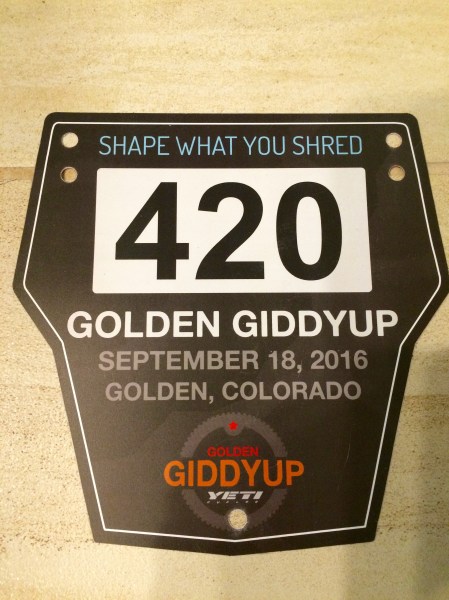
img_5597After all the effort that we’d put into transferring the race entry, I was somewhat surprised that my name was, in fact, on the racer’s list at packet pickup. The bigger surprise, however, was my race number.  Yep, I was lucky number 420.   After collecting my number and what few goodies remained so late in the day, I found a place to sit and wait for the “mandatory riders meeting”.

The meeting essentially covered rules and reiterated several times that if you come upon an injured person, you should stop to offer help.  It seems like a no-brainer to me, but apparently it’s happened, hence the reminder. The other message that was stressed was that passing riders have the right of way.  What that means is by the time a racer hears the words “on your left”, her time has already been beaten by the passing racer who started 20 or 30 seconds behind her.

The next morning I arrived at the start line at 7:15 AM – one hour before my scheduled race time.  As the announcers began calling up waves, I became confused.  It turns out I wasn’t the only one.  The announcers were calling wave numbers that no one had ever heard of.  For instance, my wave was number 38, but they were calling out something similar to “the fourth wave of the classic category.”  I brought it to their attention after several waves had departed.  They regrouped and started calling out the waves by the series of plate numbers included in that wave (even better), and everyone was happy again.

Unlike a traditional enduro race, this race had timed downhill and uphill stages.  The entry that had been transferred to me was a Giddyup Lite – North Table entry – meaning that I would race only the North Table Mountain leg of the race.  The race route had two timed climbing and two timed descending stages.   I’ve ridden on North Table Mountain more times than I can count, which was a significant contributing factor in my decision to do a last minute race.  Knowing the terrain so well,  I was a little nervous about how crowded it would be in the timed stages, even though the organizers were releasing racers every 20 seconds on the uphill stages and every 30 seconds on the downhill portions.  Much to my surprise, however, the timed release of racers really did wonders to ease trail congestion.  I  passed and was passed without any incidents; racers seemed to be respectful of the rules.

I’m proud to have finished the race 5th overall considering the injuries I had in June & July and their recovery time.  Sure, I’ve been riding as much as I can, but I haven’t been training for races.  I’m grateful to Linda for making my participation in the race possible.  I hope we can race it together next year!

One of the mantras of the race organizers was to “shape what you shred” – as seen on the pictured race plate above.   I can’t emphasize how much I appreciated that this was a core philosophy of the organizers.  I’ve been mountain biking in Jefferson County for five years and not once had I ever participated in a trail maintenance effort, until this year and for this race.  I found the experience to be so rewarding that I regret not doing it sooner.  I’ll be suggesting that this be an activity of every team/group that I’m involved with going forward.  Overall, I’d say everyone involved in this race was a winner, especially the trails!